
The Workflow Handoff: How Mid-Size Tax Firms Are Eliminating Dropped Balls Between Preparers, Reviewers, and Managers
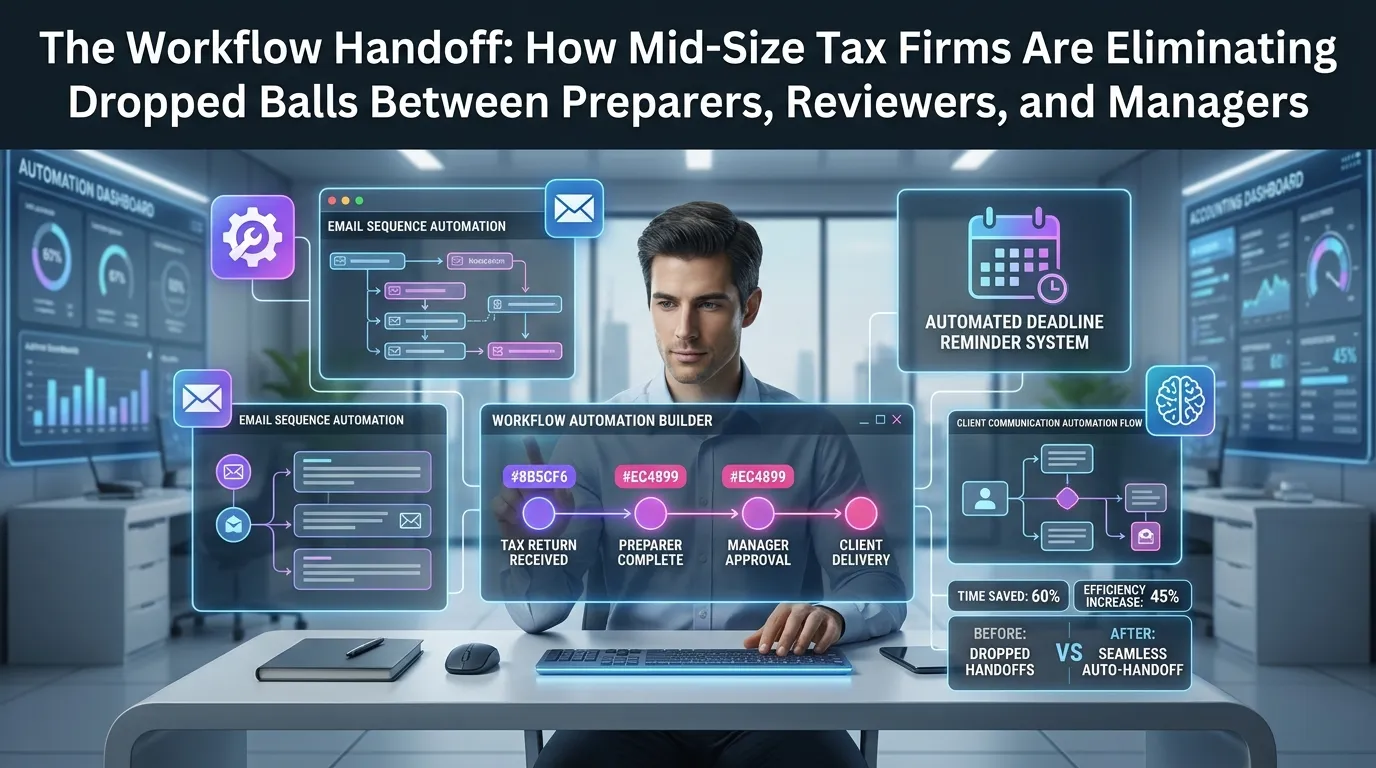
In a mid-size tax firm, the work rarely falls apart during preparation. It falls apart between people. A return gets finished by a preparer, sits in someone's inbox for three days, gets picked up by the wrong reviewer, and lands on a manager's desk with critical notes that were never communicated. These handoff failures are not a people problem — they are a process problem. And for firms handling hundreds or thousands of returns each season, the cost of dropped balls compounds quickly.
This post breaks down exactly where workflow handoffs break down in tax firms, what mid-size firms are doing differently to solve it, and how purpose-built tax firm workflow management systems are replacing the patchwork of sticky notes, emails, and shared spreadsheets that most teams still rely on today.
Why Handoffs Are the Weakest Link in Tax Firm Workflows
Most tax firm leaders will tell you their preparers are skilled and their reviewers are thorough. The problem is the space in between. When a return transitions from one role to another, critical context — client notes, open questions, missing documents, prior-year flags — often doesn't travel with it.
According to the AICPA, workflow inefficiency is one of the top operational challenges cited by accounting firms of all sizes. The issue is especially acute at the mid-size level, where firms are too large to rely on verbal communication but not yet resourced like enterprise operations with dedicated project managers.
The result is a predictable cycle: returns bounce back and forth, review queues pile up, managers spend hours chasing status updates, and clients experience delays they can't explain. Tax season becomes a scramble instead of a system.
The Three Handoff Points Where Things Go Wrong
Understanding where handoffs fail is the first step toward fixing them. In most mid-size firms, there are three critical transition points that account for the majority of workflow breakdowns.
1. Preparer to Reviewer
This is the most frequent handoff in any tax firm and, consequently, the most dangerous. When a preparer completes a return, the reviewer needs more than just the file — they need context. What was flagged? What client questions remain open? Were there any unusual circumstances this year?
Without a structured handoff protocol, reviewers often start from scratch. They re-examine issues the preparer already resolved, miss issues the preparer flagged informally, and waste time that should have been saved by the preparation work already done.
2. Reviewer to Manager
Once a reviewer completes their pass, the return moves to a manager for final sign-off. At this stage, managers are typically overloaded and need fast, reliable signals about what requires their attention. If the reviewer's notes live in a separate email thread, a comment buried in the tax software, or — worse — nowhere at all, managers are forced to review everything from scratch.
This bottleneck is one of the primary reasons manager review becomes the longest stage in the tax workflow, even though it's supposed to be the fastest.
3. Manager Back to Preparer (Revision Loops)
When a manager sends a return back for revisions, the cycle begins again. If the feedback isn't specific, documented, and tied to a clear deadline, preparers may not prioritize the revision correctly. Returns get queued behind new work, deadlines slip, and clients follow up — creating reactive firefighting that derails the entire team's rhythm.
What "Good" Tax Firm Workflow Management Actually Looks Like
High-performing mid-size firms have one thing in common: their workflow management isn't just about tracking tasks. It's about transferring context reliably at every handoff point. Here's what that looks like in practice.
Structured Status Stages with Role-Based Queues
Instead of a single shared task list, leading firms use role-based queues that automatically surface the right work for the right person at the right time. When a preparer marks a return "Ready for Review," it doesn't just change a status — it moves into the reviewer's queue, triggers a notification, and carries all associated notes forward.
This eliminates the "I didn't know it was ready" problem that plagues firms using email or generic project management tools not designed for tax workflows.
Embedded Handoff Notes and Flags
Effective tax firm workflow management systems allow preparers to attach structured notes directly to a return at the point of handoff. These aren't free-form comments — they're categorized flags: open client questions, document gaps, calculation overrides, or prior-year differences that need reviewer attention.
When a reviewer opens the return, these flags are the first thing they see. Review time drops. Accuracy improves. Nothing falls through the cracks because the handoff carries the context, not just the file.
Deadline Visibility Across All Roles
One underappreciated cause of handoff failures is deadline invisibility. A preparer finishes a return two weeks before the filing deadline and marks it complete — but the reviewer doesn't know that a client-specific commitment means the manager needs it signed off by end of week.
Firms that solve this problem give every team member a shared view of deadline priority, not just status. The IRS filing calendar creates hard external deadlines, but internal client commitments create a second layer of urgency that most generic tools can't capture.
How Technology Is Changing Tax Firm Workflow Management
The shift from reactive to proactive workflow management in tax firms is being driven largely by purpose-built automation platforms. General tools like email, shared drives, or even broad project management apps like Asana were not designed for the specific handoff dynamics of tax preparation.
A dedicated tax firm automation platform addresses this by building the handoff logic directly into the workflow engine. Status changes trigger automatic queue updates. Notes travel with the work. Managers get dashboards that show exactly where every return is, who's holding it, and how long it's been sitting at each stage.
Automation That Reduces Manual Follow-Up
One of the most time-consuming aspects of managing a tax firm workflow is the constant follow-up. "Did you get that return?" "Is it ready for review?" "When will you have the revision back to me?" These micro-conversations consume hours of manager and partner time every week.
Automation eliminates most of this by triggering reminders, escalation alerts, and status notifications without requiring anyone to chase them manually. When a return has been sitting in a reviewer's queue for more than 48 hours without action, the system flags it — before it becomes a problem, not after.
Accountability Without Micromanagement
Mid-size firm managers often feel caught between two bad options: either they micromanage every handoff to ensure nothing drops, or they step back and trust the process — only to discover returns slipping through the cracks during a post-deadline debrief.
Good workflow systems create a third path: visibility without interference. Managers can see exactly where every return stands without asking anyone. They intervene only when the system surfaces a genuine bottleneck. This is what real tax firm workflow management looks like at scale.
The Journal of Accountancy has noted that firms investing in workflow technology consistently report improved staff satisfaction alongside productivity gains — because clear systems reduce the frustration of unclear expectations and dropped communication.
Building a Handoff Culture, Not Just a Handoff System
Technology is a force multiplier, but it works best when paired with deliberate team habits. The most successful firms don't just implement a new tool — they redesign their handoff culture around it.
Define What "Ready for Handoff" Means
Every firm should have a written definition of what it means for a return to be "ready for review." This isn't just "preparation complete" — it includes a checklist: all source documents reconciled, notes attached, open items flagged, client correspondence logged. Without this definition, handoff quality varies by preparer, and reviewers never know what they're getting.
Create a Feedback Loop from Reviewer to Preparer
When a reviewer sends a return back for revision, the quality of that feedback determines how quickly the revision comes back clean. Firms that train reviewers to give specific, actionable, documented feedback — rather than vague verbal direction — see dramatically shorter revision cycles.
This feedback loop also serves as professional development. Preparers learn from structured reviewer notes in a way they never do from a quick hallway conversation.
Hold a Weekly Workflow Review Meeting
High-performing firms hold a short weekly meeting — 20 to 30 minutes — where managers review the workflow dashboard with team leads. The goal isn't to assign blame for delays. It's to identify systemic bottlenecks: stages where returns consistently pile up, clients who always require extra revision cycles, or time-of-season patterns that can be addressed proactively.
This meeting is only possible when your workflow system gives you the data to have it. Without a centralized dashboard, the meeting becomes a status update session — and everyone's time is wasted.
What to Look for in a Workflow Management Solution for Your Tax Firm
Not all workflow tools are created equal for tax firms. When evaluating platforms, mid-size firms should prioritize the following capabilities.
Role-based task queues that automatically surface work based on who's responsible at each stage. Structured handoff notes that travel with the return, not in a separate email thread. Deadline management that accounts for both IRS filing dates and internal client commitments. Automated reminders and escalation alerts that reduce manual follow-up. And reporting dashboards that give managers real-time visibility into team capacity and workflow health.
If you're ready to see how these capabilities translate into practice, you can start your free trial and explore how MultidexTech structures handoffs across your entire team workflow.
For firms evaluating budget and feature tiers, it's also worth taking a moment to view our pricing plans to find the right fit for your team size and volume.
Frequently Asked Questions About Tax Firm Workflow Management
What is tax firm workflow management?
Tax firm workflow management refers to the systems, processes, and tools used to organize, track, and optimize how work moves through a tax firm — from initial client intake through preparation, review, manager approval, and final filing. Effective workflow management ensures that every return progresses predictably, handoffs between team members carry the right context, and nothing falls through the cracks during high-volume periods like tax season.
Why do handoffs fail in tax firms?
Handoffs fail most often because of three root causes: lack of structured communication at transition points, no centralized visibility into where work stands, and tools that weren't designed for multi-role tax workflows. When preparers, reviewers, and managers rely on email, spreadsheets, or verbal communication to transfer work, context gets lost and accountability becomes unclear. Purpose-built workflow platforms address these gaps by automating handoff logic and surfacing the right information to the right person at each stage.
How can automation improve handoffs between tax preparers and reviewers?
Automation improves handoffs by eliminating manual status updates and ensuring that context travels with the work. When a preparer marks a return ready for review in an automated system, the return moves into the reviewer's queue automatically, a notification is triggered, and any preparer notes or flags are immediately visible. This removes the "I didn't know it was ready" problem and reduces the back-and-forth communication that consumes hours of team time each week.
What size of tax firm benefits most from workflow management software?
Mid-size tax firms — typically those with 5 to 50 staff members handling hundreds to thousands of returns per season — tend to see the greatest benefit from dedicated workflow management software. Smaller firms can often manage with simpler systems, while large enterprise firms typically have dedicated operations staff. Mid-size firms hit the inflection point where informal communication breaks down but they haven't yet built the infrastructure to replace it, making software the most impactful investment.
How does MultidexTech help with tax firm workflow handoffs?
MultidexTech is built specifically for tax firm operations, with workflow logic designed around the preparer-reviewer-manager handoff model. The platform provides role-based task queues, structured handoff notes, automated reminders, deadline tracking, and manager dashboards that give real-time visibility across the entire team. Firms using MultidexTech report fewer returns falling through the cracks, shorter review cycles, and significantly less time spent on internal status follow-up. You can explore more on our blog or get started with a free trial today.
Stop Managing Handoffs Manually — Start Your Free Trial
Every return that gets dropped in a handoff represents a client relationship at risk and a team member's time wasted on avoidable rework. The good news is that this is one of the most solvable problems in tax firm operations — when you have the right system in place.
MultidexTech was built to eliminate exactly these kinds of workflow gaps. With role-based queues, structured handoff notes, automated alerts, and real-time manager dashboards, your team can move returns from preparer to reviewer to manager without losing a single piece of critical context along the way.
Try it free for 14 days — no credit card required. Start your free trial today and see how much smoother your next filing season can run.