The Distributed Team Dilemma: How Virtual Tax Firms Are Keeping Every Remote Preparer Accountable and In Sync
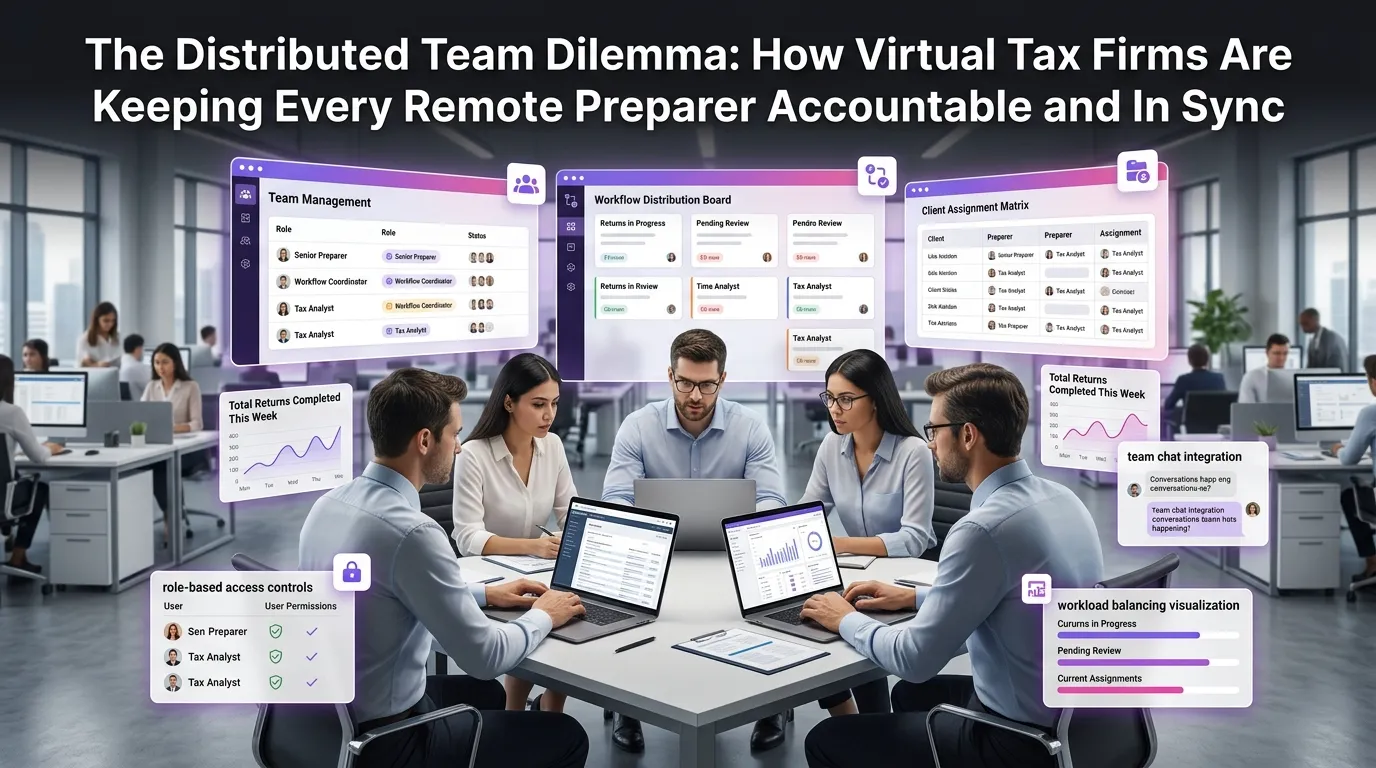
The modern tax firm looks nothing like it did a decade ago. Today, preparers log in from home offices in different time zones, seasonal contractors join mid-January and disappear by April 15, and firm owners manage complex client rosters without ever sharing a physical workspace with their team. This shift has unlocked real advantages — lower overhead, access to a wider talent pool, and greater flexibility — but it has also introduced a persistent challenge: virtual tax firm team management. Keeping every remote preparer accountable, informed, and moving in the same direction is harder than it looks, and the firms that crack this code are pulling ahead of the competition fast.
Why Remote Tax Teams Face Unique Accountability Challenges
Tax work is inherently deadline-driven and detail-intensive. A missed extension, a misfiled form, or a client communication that falls through the cracks can have serious financial and reputational consequences. In a traditional office, a manager can walk the floor, catch a problem early, and course-correct in real time.
In a distributed environment, that kind of passive oversight disappears entirely. Managers must rely on systems, processes, and technology to surface the information they used to absorb naturally. Without the right infrastructure, small problems compound quietly until they become visible — usually at the worst possible moment.
The American Institute of CPAs (AICPA) has documented the accelerating shift toward remote and hybrid work arrangements in accounting, noting that firms that invest in structured remote workflows outperform those that simply transfer in-office habits to a virtual setting. The difference is intentional design.
The Hidden Costs of Poor Coordination
When remote preparers operate without a unified system, duplicated effort becomes common. Two team members may work on the same client file simultaneously, each unaware of the other's progress. Clients receive inconsistent communication, and firm owners spend hours each week chasing status updates instead of growing the business.
There are compliance risks, too. Tax preparers operating under a single EFIN or firm license are collectively responsible for quality standards. A single preparer skipping a review step or mishandling client data can create liability for the entire firm. Accountability isn't just a productivity concern — it's a risk management imperative.
Core Elements of Effective Virtual Tax Firm Team Management
Building a high-performing distributed tax team requires more than a group chat and a shared drive. Firms that succeed do so by establishing four foundational pillars: visibility, standardized workflows, structured communication, and performance metrics.
1. Centralized Visibility Into Every Client File
Every team member — from lead preparer to reviewer to the firm owner — should be able to see the real-time status of every client engagement without asking anyone. This means having a single source of truth where file status, assigned preparer, outstanding items, and deadlines are always current and accessible.
Centralized dashboards eliminate the need for status-update meetings and reduce the cognitive load on managers. When something is overdue or stuck, it surfaces automatically rather than requiring someone to notice and escalate. This kind of transparency is foundational to effective virtual tax firm team management.
2. Standardized, Repeatable Workflows
One of the most common mistakes distributed tax firms make is allowing each preparer to develop their own process. Without standardization, quality becomes inconsistent and training new hires takes far longer than necessary. Every engagement should follow a defined sequence of steps — intake, document collection, preparation, review, client approval, filing, and follow-up.
When workflows are codified into the platform your team uses daily, compliance with those workflows becomes automatic rather than aspirational. Preparers can't accidentally skip a review step if the system requires it before moving forward. This is where technology moves from helpful to essential.
The Journal of Accountancy has consistently highlighted workflow automation as one of the highest-ROI investments a tax firm can make, particularly as team size scales. The efficiency gains compound with every additional preparer added to the roster.
3. Structured Asynchronous Communication
Remote teams thrive on asynchronous communication — but only when it's structured. Unstructured async communication (endless email threads, scattered Slack messages, informal text chains) creates noise without clarity. Structured async communication, by contrast, keeps context attached to the work itself.
This means notes, questions, and client updates should live inside the client file rather than in a separate messaging tool. When a reviewer has a question about a Schedule C, that question should be logged against the specific return, not buried in a channel where it may be missed or misattributed. Context-aware communication is a hallmark of mature remote operations.
4. Performance Metrics That Drive Accountability
What gets measured gets managed. Remote team members perform better when they have clear visibility into their own performance data — returns completed per week, average turnaround time, client satisfaction scores, error rates. This isn't about surveillance; it's about giving professionals the feedback they need to improve and the recognition they deserve when they excel.
Firm owners benefit equally from aggregate metrics. Knowing which preparers are consistently hitting deadlines, which clients are perpetually delayed due to document submission issues, and where bottlenecks cluster across the team enables smarter resource allocation and proactive problem-solving.
Technology as the Connective Tissue of a Remote Tax Team
None of the pillars above are achievable at scale without purpose-built technology. General project management tools like Trello or Asana can handle basic task tracking, but they aren't designed for the specific rhythms, compliance requirements, and client communication patterns of a tax firm.
A dedicated tax firm automation platform bridges the gap between generic software and the real operational needs of distributed tax teams. Purpose-built platforms understand concepts like EFIN management, preparer-level permissions, IRS deadline calendars, and e-signature workflows — features that would require extensive customization to replicate in a general tool.
What to Look for in a Remote Team Management Platform
When evaluating technology for your distributed team, prioritize these capabilities:
- Role-based access controls — Preparers should see only what they need. Reviewers need broader visibility. Owners need everything.
- Automated task assignment — New client engagements should trigger a workflow automatically, assigning tasks to the right team members without manual intervention.
- Deadline tracking with alerts — The system should proactively flag approaching deadlines and escalate overdue items before they become emergencies.
- Client portal integration — Clients should be able to upload documents, review returns, and sign approvals through a secure portal that feeds directly into the preparer's workflow.
- Audit trail and activity logging — Every action taken on a file should be timestamped and attributed to a specific user, creating a defensible record of the engagement.
The IRS guidance for tax professionals emphasizes the importance of maintaining accurate records and secure data handling — requirements that become more challenging, not less, in a distributed environment. Technology that enforces these standards by design reduces compliance risk significantly.
Building a Culture of Accountability in a Virtual Setting
Technology enables accountability, but culture sustains it. Firm owners and team leads play a critical role in establishing norms that make remote work feel connected and purposeful rather than isolated and transactional.
Setting Clear Expectations from Day One
Every remote preparer should join the team with a clear understanding of performance expectations, communication norms, and quality standards. Onboarding documentation, recorded training walkthroughs, and a structured first-week checklist reduce ambiguity and accelerate time-to-productivity.
Firms that invest in thorough onboarding for remote hires report significantly lower turnover among seasonal staff — a meaningful advantage given how much institutional knowledge experienced preparers carry. Retention of good contractors year-over-year is one of the most underappreciated competitive advantages in the tax industry.
Regular Structured Check-Ins (Not Just During Tax Season)
Weekly team meetings during peak season and monthly check-ins in the off-season keep communication channels open and allow managers to identify burnout, confusion, or disengagement early. These don't need to be long — a focused 20-minute video call with a clear agenda is more valuable than an hour-long meeting with no structure.
Use these touchpoints to review performance metrics together, celebrate wins, and address recurring friction points in the workflow. When team members feel seen and supported, accountability becomes intrinsic rather than imposed.
Scaling Your Virtual Tax Firm Without Losing Control
One of the most exciting aspects of the remote model is its scalability. A well-designed distributed operation can add preparers, serve more clients, and expand into new markets without the constraints of physical office space. But scale amplifies whatever is already present — great systems become even more valuable, and weak ones become catastrophic.
Firms preparing to scale should audit their current workflows before adding headcount. If existing processes are manual, inconsistent, or dependent on institutional knowledge held by a single person, adding more people will multiply those problems. Systematize first, then scale.
Our blog covers strategies for scaling virtual tax practices in depth, including how to structure tiered review processes, manage multi-state compliance, and build repeatable client onboarding experiences that don't require owner involvement to execute.
Frequently Asked Questions
How do I hold remote tax preparers accountable without micromanaging them?
The key is to build accountability into your systems rather than your management style. Use a platform that tracks file status, deadlines, and completed tasks automatically. When preparers know the system surfaces delays and missed steps without requiring a manager to notice them, accountability becomes structural rather than personal. Pair this with clear expectations set at onboarding and regular performance reviews based on objective metrics.
What are the biggest risks of managing a virtual tax firm team without dedicated software?
The primary risks are missed deadlines, inconsistent quality, data security vulnerabilities, and poor client communication. Without a centralized system, critical information lives in individual email inboxes, personal spreadsheets, and informal messages — none of which are auditable, searchable, or shared. This creates single points of failure that can harm clients and expose the firm to liability.
Can virtual tax firm team management tools work for small firms with only a few preparers?
Absolutely. In fact, small firms often benefit most from structured tools because every hour saved on coordination has a proportionally larger impact. A solo owner with two or three remote preparers can reclaim significant time by replacing manual status tracking and email follow-ups with automated workflows. The investment scales down appropriately, and the habits built early make growth much smoother.
How should I handle onboarding seasonal remote preparers efficiently?
Create a standardized onboarding workflow that includes access provisioning, recorded training modules, a first-week task checklist, and a buddy system pairing new hires with experienced team members. Store all onboarding materials in a single accessible location. Using a platform with role-based access makes it easy to provision new users with exactly the permissions they need without exposing sensitive firm or client data.
How does MultidexTech support virtual tax firm team management specifically?
MultidexTech is built from the ground up for distributed tax teams. It provides centralized client file management, automated workflow assignment, deadline tracking, role-based access controls, a secure client portal, and real-time performance dashboards — all designed around the specific operational patterns of professional tax practices. You can start your free trial and configure your remote team workflows in a matter of hours.
Ready to Bring Your Remote Team Into Sync?
Managing a distributed tax team doesn't have to mean constant uncertainty about who's doing what, whether deadlines are being met, or how clients are being served. With the right processes and purpose-built technology, virtual tax firms can operate with the same — or better — coordination than traditional in-office practices.
MultidexTech gives firm owners and team leads the visibility, automation, and accountability tools they need to run a tight remote operation without burning out on manual oversight. Whether you're managing a team of two or twenty, the platform scales with your practice.
Try it free for 14 days — no credit card required. Start your free trial today and experience what structured virtual tax firm team management actually feels like. Or, if you're ready to explore options, view our pricing plans to find the right fit for your firm.